
The Conversation You Avoid
Why the email keeps not getting sent.

The email has been open in a window since this morning. You wrote the first version before coffee, when everything about the situation felt clearer.
By mid-morning you’d softened it, because the first version felt pushier than you meant.
By noon you’d softened it further, and now the version on the screen says less than you wanted to say and more than feels comfortable to send.
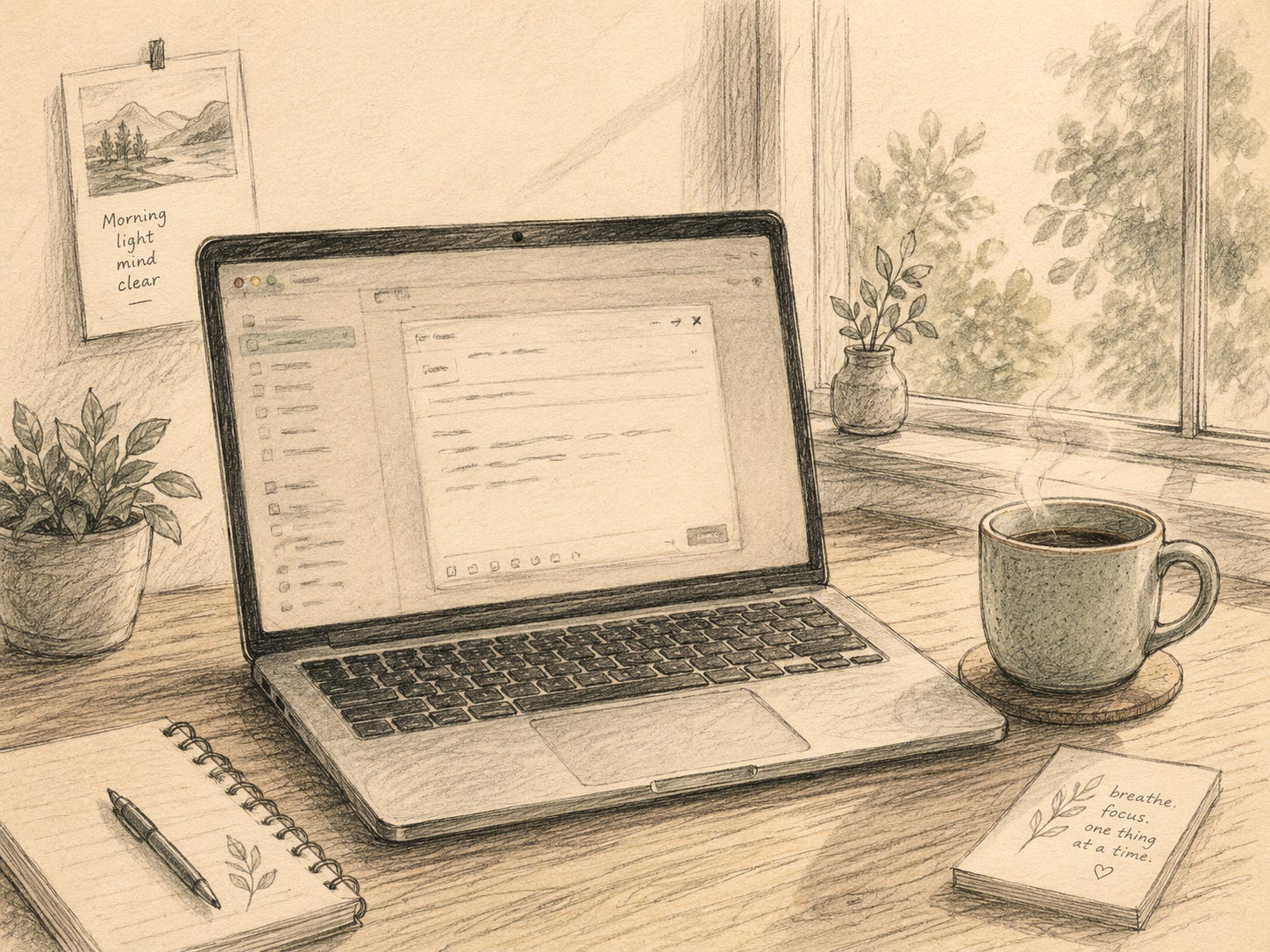
You read it once more. The cursor blinks in the body field. You scroll up to the subject line and consider rewriting that too. You don’t.
Somewhere around three you decide it’s not the right time of day to send it. People are wrapping up, getting ready for meetings, not in the headspace to receive what you’re asking.
You’ll send it tomorrow morning. You save it as a draft.
The next morning the email is still in the folder. You open it again. The version that felt soft yesterday now feels about right, but the timing isn’t great because it’s Wednesday and Wednesdays are hard for everyone. You’ll send it Thursday. You leave it where it is.
By Friday afternoon you’ve stopped opening the draft. You know it’s there. You think about it more often than you’d admit. The draft is no longer about whether to send it; it’s just sitting there in the background.
You’re not making the reasons up. You really don’t want to push. People have a lot going on, and pressure makes things worse. You’ve watched salespeople create the version of the conversation where everyone tightens up, and no way you’ll let that happen. The not-sending is connected to that work.
Timing matters too. There are bad mornings to send something like this, and the difference between Tuesday and Thursday actually does change how a request lands. You’re not making it up when you tell yourself you’re waiting for the right window.
And there’s the relationship to think about. You’ve built whatever you’ve built with this person, and the email could shift that in a direction you don’t fully control. Leaving it in the folder is, in a way, protecting the part of the relationship that doesn’t involve the ask. That feels like care.
None of those reasons are wrong, which is why the email stays in the folder.
There’s something quieter beneath the reasons. It’s harder to see because the reasons are totally legit. But if you watch closely enough, you notice that the not-sending has a quality the explanations alone don’t fully explain.
The reasons would let the email go out at the right moment, in the right tone, on the right day. Your avoidance keeps that moment from coming. The right day arrives, and you find a new reason. The pattern outlives the stories.
What the pattern is protecting isn’t the relationship, or the person on the other end, or your sense of yourself as someone who doesn’t push. Those are the things your stories are protecting. The pattern is protecting something else.
The email, once sent, will produce a response. That response might be yes. It might be no. It might be a long silence which you’ll have to interpret.
You’re not avoiding the conversation. You’re avoiding what the conversation would tell you.
This isn’t about fear, really. A no is hard, but you can live with a no. What’s harder is the version where you have to revise something you believe to be true. The relationship you thought you had. The interest you thought was there. The version of the project where this person was the right next step. The state of not-yet-knowing protects all of those from being revised.
The avoidance doesn’t read as protection from the inside. From the inside it reads as care, or timing, or judgment about the right moment. But you can see that the reasons are keeping the situation from being tested.
The first time you catch yourself doing this after seeing it clearly, the email is still in the folder. The reason of the day still arrives, the timing is still off, and none of that has changed.
What’s changed is what you can hear yourself saying. As the reason surfaces, you notice it. You can hear it sounding right, and you can also hear what it’s doing. Both things are true at once. The reason is real. The pattern is also doing what patterns do.
You don’t suddenly become the person who immediately sends every email. What does end is the small private fiction that the behavior was about something else.
You can still close the laptop with the draft saved. You just can’t quite tell yourself the same story while you do it.
That’s what recognition does. It doesn’t fix the pattern; it just makes it harder to ignore.
The email might go out next week. It might stay in the folder for another month. You might write a different version of it tomorrow and send that one instead. None of that is what the recognition changed.
What the recognition changed is what you know about yourself the next time you catch yourself doing it. The same scene plays out, and now you have a second narration running beneath the first one. The first one says: not the right time, not the right tone, not yet. The second one says: I know what this is.
You don’t have to do anything with that. The pattern isn’t a moral failure that needs to be corrected. It’s a thing humans do when they’re managing information about themselves and the people around them.
Knowing that doesn’t end it. It just changes what’s true while it’s happening.
The Calibration Field Guide ships at the end of June. It's a short field instrument for catching four kinds of moments most people miss in conversation, including the one this essay describes. Subscribe below to be notified when it becomes available.
The line that stopped me: "You're not avoiding the conversation. You're avoiding what the conversation would tell you." I run a print shop and have had quotes sitting in my drafts for exactly this reason. I kept telling myself the timing was off or the customer was busy. But really I didn't want to find out the project had gone somewhere else. What you named here is that the avoidance isn't weakness, it's self-protection from having to update a story you've been living in. That reframe changes how I'm going to read my own hesitation going forward.